Eastern Redbud Tree – Spring’s First Color
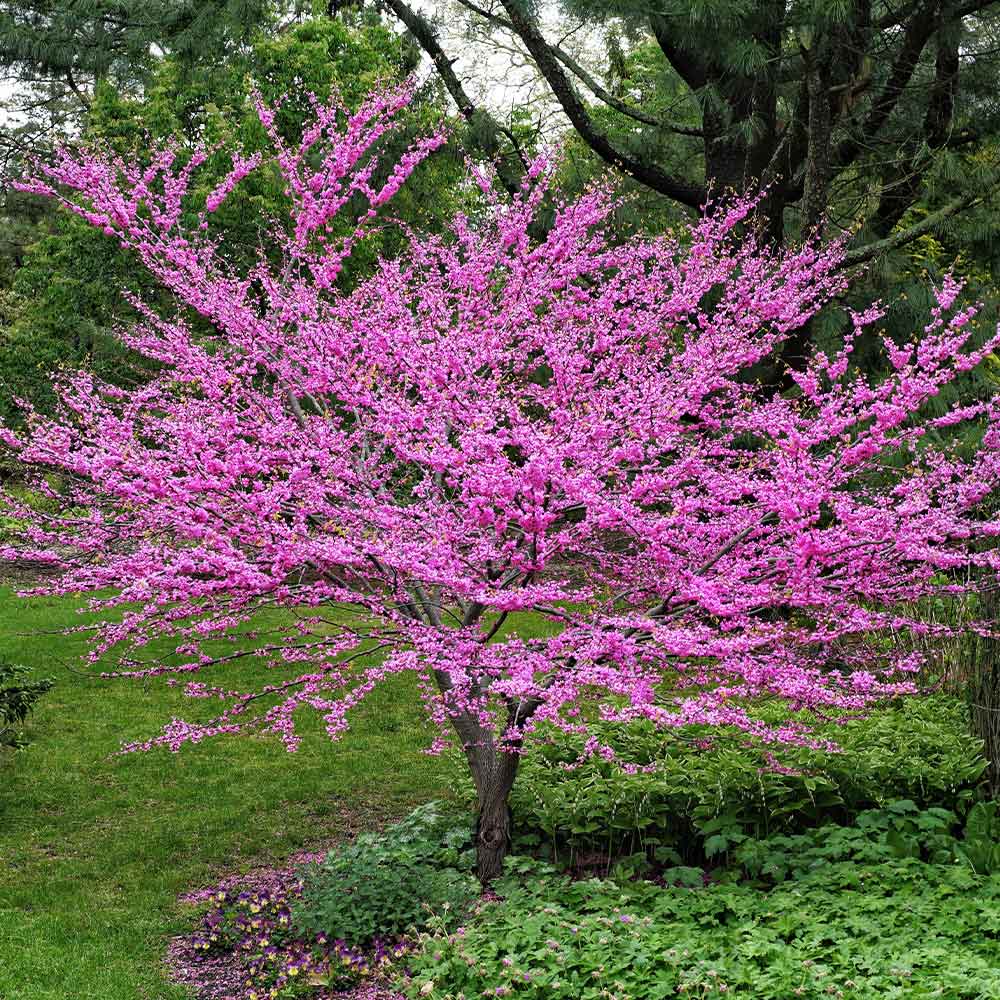
Welcome spring with a brilliant burst of magenta-pink blooms from the Eastern Redbud Tree (Cercis canadensis). This beloved native tree lights up the landscape with clusters of flowers along bare branches, followed by heart-shaped leaves that turn golden-yellow in fall. Its compact size and graceful form make it a standout choice for gardens, borders, and naturalized plantings.
- Deer Resistant: Offers moderate deer resistance—deer may browse young trees but generally avoid mature specimens.
- Sun Requirements: Thrives in full sun to partial shade; best flowering occurs with at least 4–6 hours of direct sun.
- Water Needs: Prefers moist, well-drained soil; water regularly during establishment and during dry spells.
- Height at Maturity: Reaches 20–30 feet tall and 25–35 feet wide, with a broad, rounded canopy.
- Growth Habit: Upright, spreading, and multi-trunked; moderate growth rate.
- Hardiness Zones: USDA Zones 4–9.
Planting Tips – Eastern Redbud
Plant Eastern Redbud in a spot with good air circulation and well-drained soil. Dig a hole twice as wide as the root ball. Water deeply after planting and mulch to retain moisture and protect roots. Minimal pruning is needed—shape after flowering to remove any dead or crossing branches.
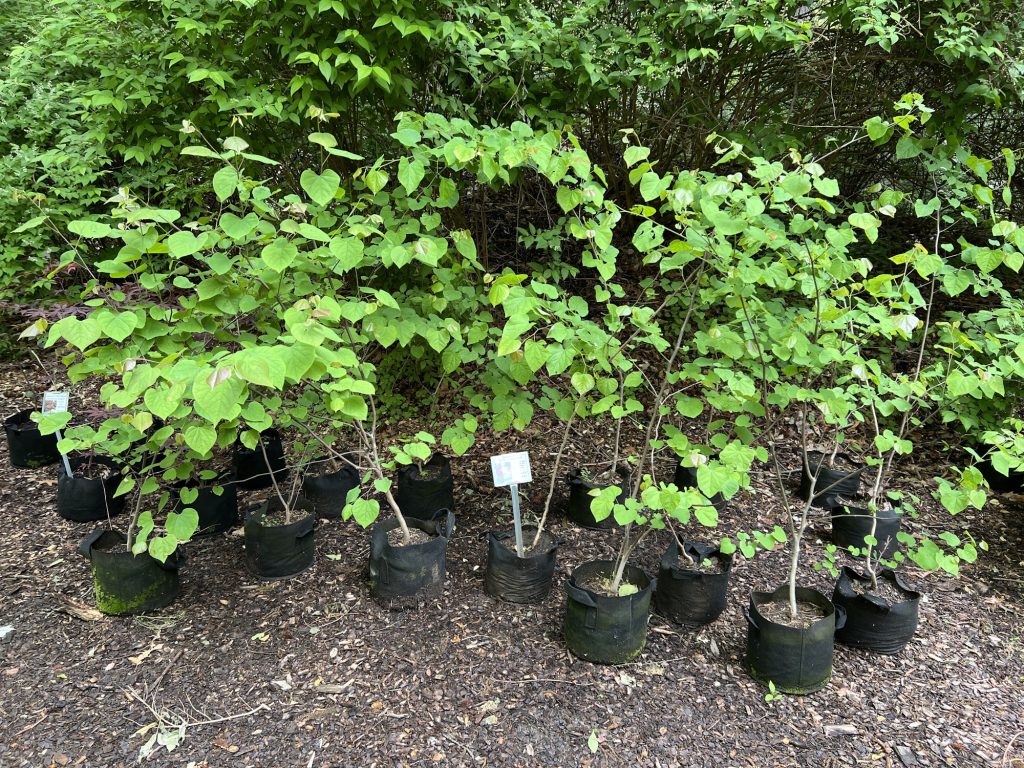
Currently we have a good selection of Eastern Redbuds at 3-5 ft in size.
Mature Eastern Redbud
Redbuds In Our Nursery